MAX Power Mining: A New Energy Frontier?
MAX Power is drilling to determine whether southern Saskatchewan hosts a large, commercially productive natural-hydrogen and helium system. Lawson is Canada's first confirmed subsurface hydrogen, but the thesis depends on sustained commercial flow, which is still unproven. Long position, tracked as coverage. Very high risk.
- Entry
- C$2.09
- Target
- None (coverage)
- Last
- C$2.55
- Return (live)
- +22.0%
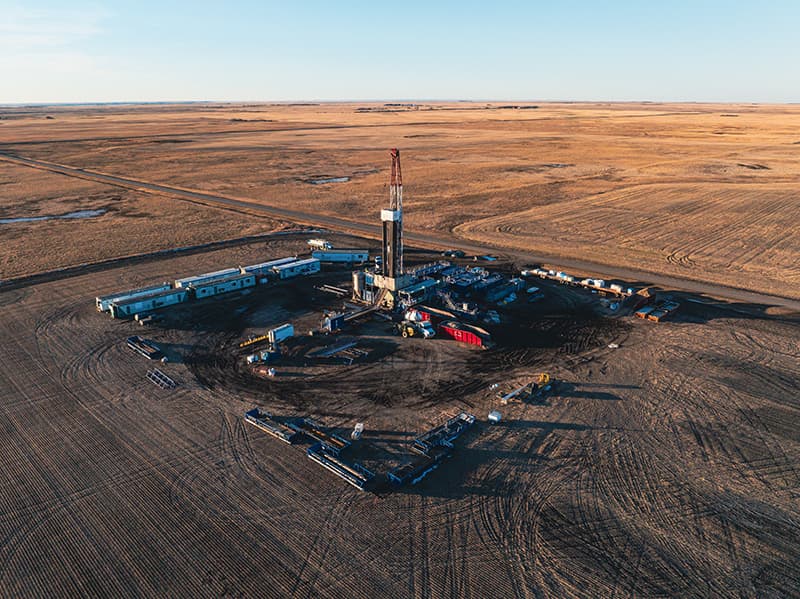
A new energy frontier? MAX Power Mining certainly thinks so.
Natural hydrogen. Ever heard of it? Probably not, but it may be time to become familiar with a resource that could emerge as an entirely new source of clean, low-cost energy.
What is natural hydrogen?
Natural hydrogen, also known as geologic, white or gold hydrogen, is hydrogen gas that occurs naturally beneath the Earth's surface. It can be created through several geological processes, including reactions between water and iron-rich rocks.
Unlike conventional hydrogen, which must be manufactured using natural gas or electricity, natural hydrogen may be extracted directly from underground reservoirs. If it can be produced economically, this could remove much of the energy-intensive manufacturing process associated with traditional hydrogen.
The investment thesis is straightforward. If natural hydrogen can be discovered in meaningful concentrations and produced at sustained commercial flow rates, it could potentially offer a cleaner and lower-cost alternative to manufactured hydrogen.
That "if" remains important. Finding hydrogen is only the first step. A commercially viable project must also demonstrate sufficient pressure, permeability, reservoir size, continuity and sustained deliverability. The gas must then be processed and transported, or consumed near the wellhead, at a cost that supports an economic development.
For decades, hydrogen was generally considered too light, mobile and reactive to accumulate in meaningful underground reservoirs. That assumption began to change following the discovery at Bourakebougou, Mali. A water well drilled there in 1987 unexpectedly encountered a flammable gas and was subsequently sealed. The well was reopened in 2011, when testing identified gas containing approximately 98% hydrogen. It was later connected to a small generator that supplied electricity to the nearby village, providing an early real-world demonstration that natural hydrogen could be extracted and put to practical use.
Mali proved the concept. The next question is whether natural hydrogen can be discovered, delineated and produced economically on a much larger scale.
Gold Hydrogen, QIMC and Koloma
Several companies are attempting to answer that question.
Gold Hydrogen is developing the Ramsay Project in South Australia, where it has reported hydrogen concentrations of up to approximately 95.8% and helium concentrations of up to approximately 36.9% on an air-corrected basis. These results demonstrate that exceptionally high concentrations of hydrogen and helium can coexist underground. However, concentration alone does not establish commerciality. Pressure, permeability, flow, recoverable volumes and development costs remain critical.
Quebec Innovative Materials Corp., or QIMC, is another relevant Canadian explorer. At Bennett Hill in Nova Scotia, QIMC reported a peak mud-gas reading of 24.3% hydrogen at approximately 707 metres, along with numerous additional percent-level readings and a clean gas signature containing little methane. The results provide further evidence that potentially meaningful natural-hydrogen systems may exist in multiple Canadian geological settings. However, QIMC's mud-gas readings should not be directly compared with MAX Power's drilling readings without considering differences in geology, drilling methods, instrumentation, sampling and gas dilution. Like MAX Power, QIMC must ultimately demonstrate reservoir pressure, recoverable volumes and sustained commercial flow.
Koloma is a private American natural-hydrogen company using proprietary geological data and technology to identify potentially commercial reservoirs. Its investors include Bill Gates-founded Breakthrough Energy Ventures, Amazon's Climate Pledge Fund, United Airlines' Sustainable Flight Fund, Energy Impact Partners and Mitsubishi Heavy Industries. That backing shows that major technology, aviation and industrial investors are taking natural hydrogen seriously, although Koloma has disclosed relatively little publicly about its drilling locations and results.
Gold Hydrogen has demonstrated very high concentrations. QIMC has reported meaningful Canadian hydrogen readings. Koloma has attracted major institutional and strategic capital. The central question remains unanswered: can a large natural-hydrogen system deliver enough gas, at sufficient pressure and at sustained flow rates, to support commercial production?
This is where Canada enters the picture, and where better than Saskatchewan?
Why Saskatchewan?
Saskatchewan is already one of the world's most important resource jurisdictions. It is a global leader in potash and uranium and has emerged as Canada's leading helium-producing province.
It also has decades of experience in drilling, subsurface geology, resource regulation and energy development. Existing service companies, historical well data, seismic coverage, skilled personnel and industrial infrastructure could make Saskatchewan an attractive jurisdiction in which to build a new subsurface energy industry.
Could Saskatchewan make room for one more globally significant resource? MAX Power Mining certainly thinks so.
The MAX Power opportunity
MAX Power is attempting to establish Saskatchewan as the birthplace of large-scale natural-hydrogen development. The company trades on the Canadian Securities Exchange under MAXX, in the United States under MAXXF, and in Frankfurt under 89N.
MAX Power says it confirmed Canada's first natural-hydrogen subsurface system through purpose-driven deep drilling at Lawson. The company is now conducting a multi-well commercial-validation program intended to assess hydrogen and helium concentrations, reservoir pressure, reservoir characteristics, geological scale, connectivity and potential deliverability.
MAX Power is therefore no longer asking only whether natural hydrogen exists in Saskatchewan. It is trying to determine whether a large system can be mapped, repeatedly drilled and ultimately advanced toward commercial production. Its Saskatchewan portfolio is built around four key components: the district-scale Genesis Trend, the Lawson discovery and commercial-validation program, Bracken and the Grasslands Project, and the company's large permitted and pending land position.
The Genesis Trend
The foundation of MAX Power's strategy is the Genesis Trend, a geological corridor extending approximately 475 kilometres across southern Saskatchewan. The trend borders the Prairie Evaporite, a massive salt-bearing formation that hosts Saskatchewan's potash deposits. MAX Power's geological model proposes that these thick salt formations could help trap and seal hydrogen migrating through underlying faults and fractures.
A viable natural-hydrogen system requires several components to work together: rocks capable of generating hydrogen, faults and fractures that allow the gas to migrate, reservoir space in which the gas can accumulate, a geological trap, a sufficiently impermeable seal, and pressure and connectivity capable of supporting production.
MAX Power currently reports approximately 2 million acres under permit, following the addition of its Aurora Project next to Lawson. The company has also reported approximately 5.7 million additional acres under application. The distinction is important. The 5.7 million acres are under application and should not be treated as fully granted permits. If approved, however, the additional ground would give MAX Power an unusually large pipeline of targets across Saskatchewan.
The strategy appears to be to use results from Lawson and Bracken to refine the company's geological model and then apply those lessons across its wider land package. Acreage alone does not create value. The land becomes valuable only if MAX Power can demonstrate that its targeting model repeatedly identifies productive hydrogen and helium systems.
Lawson
Lawson is the central asset in the MAX Power investment thesis. The original Lawson 15-19 well confirmed that natural hydrogen was present within the subsurface. A subsequent 3D seismic survey identified a coherent structural closure of approximately 14 square kilometres within the broader 28-square-kilometre Lawson Complex.
The seismic interpretation suggested that the original discovery well was located near the edge of a potentially much larger structure. MAX Power therefore positioned Lawson 2-24 approximately 2.4 kilometres away to test what it interprets as the structural apex. Gas tends to migrate toward the higher portions of sealed structures, so the apex may theoretically provide better conditions for accumulation. However, an apex does not guarantee better concentrations or flow. Reservoir quality, fracture connectivity, pressure, water saturation and seal integrity remain equally important.
Lawson 2-24
MAX Power began drilling Lawson 2-24 on July 13, 2026, as the first well in its commercial-validation program. On July 27, the company reported that the well had reached a measured depth of approximately 2,370 metres. It reported virtually continuous natural-hydrogen readings over approximately 831 metres, with readings increasing as the well deepened. MAX Power also reported its highest hydrogen readings to date within a major fracture zone in the basement complex. The company recovered approximately 63 metres of core from the Deadwood Formation into the basement, with 100% reported recovery. It also observed more frequent helium spikes than in the original Lawson well.
These are encouraging drilling indicators, but they are not yet proof of commerciality. Real-time instruments can indicate the presence and relative intensity of hydrogen while drilling, but they do not establish final laboratory concentrations, stabilized gas composition, reservoir pressure, production rates, recoverable volumes or sustained commercial flow.
The next stages are expected to provide the metrics that matter most: laboratory hydrogen and helium concentrations, well logs and core analysis, completion of selected reservoir intervals, pressure testing, initial and stabilized flow rates, water-production data, and evidence of reservoir connectivity and continuity.
A very high concentration with poor flow may have limited commercial value. A lower concentration with strong pressure and sustained deliverability could potentially be much more attractive. The decisive question is not simply how much hydrogen is in the gas. It is how much gas the reservoir can produce, and for how long.
Helium: a potential second source of value
Although natural hydrogen is the central MAX Power thesis, helium could become a significant second source of value at both Lawson and Bracken. Helium is a scarce gas used in MRI systems, semiconductor manufacturing, aerospace, scientific research, fibre-optic production, quantum computing and other advanced industrial applications. Unlike hydrogen, helium cannot be economically manufactured. Commercial supply depends on naturally occurring underground accumulations. Even relatively modest helium concentrations can therefore be valuable if reservoir volumes and flow rates are sufficient.
Lawson's helium findings
At the original Lawson 15-19 well, nine sealed-core gas samples from the Cambrian basal sands returned helium concentrations as high as approximately 8.7% and an average helium concentration of approximately 4.4%. The helium-bearing zone was located immediately above the basement complex containing the natural-hydrogen discovery. These are unusually high reported concentrations in the context of the commercial helium industry. However, concentration alone does not establish economic production. The value of the helium will depend on reservoir pressure, flow, thickness, continuity, recoverable volumes and processing requirements.
The position of the helium zone immediately above the natural-hydrogen discovery raises the possibility that Lawson contains a stacked gas system. Potential zones could include natural hydrogen within the basement complex, helium-rich gas in the overlying Cambrian basal sands, and additional gas-bearing fracture or reservoir intervals. If multiple zones can eventually be completed and produced, the combined hydrogen and helium opportunity could materially improve Lawson's economics.
Helium at Lawson 2-24
MAX Power reported more frequent helium spikes while drilling Lawson 2-24 than were observed in the original Lawson well. Because Lawson 2-24 is approximately 2.4 kilometres from Lawson 15-19, helium indications at both wells may suggest the system extends beyond one isolated location. However, the drilling spikes do not establish stabilized helium concentrations, reservoir connectivity, recoverable volumes or commercial flow. Laboratory analysis and eventual pressure and flow testing will be required.
An expected helium update
MAX Power stated in its July 14 news release that its geological team and independent consultant GLJ were encouraged by the helium potential at Lawson. The company also said its helium analysis was continuing and that an update to the January results was expected later in July. With July nearing its end, that update represents a potential near-term catalyst. It could provide further information regarding confirmation or interpretation of the original helium results, additional sample analysis, the thickness and continuity of the helium-bearing interval, the relationship between the hydrogen and helium zones, potential completion targets and recommended next steps.
Investors should not assume that an announcement is guaranteed on a particular day. More importantly, the substance of the update will matter more than its timing. Confirmation of high helium concentrations would be positive, but commercial value would still depend on pressure, flow and recoverable volumes.
Why helium matters
If hydrogen and helium can be produced from the same development, helium could potentially add a second revenue stream, improve project margins, offset hydrogen-processing costs, attract industrial-gas partners, provide access to an established customer base, and support processing infrastructure.
Natural hydrogen remains an emerging industry with developing markets. Helium already has established global industrial demand. If MAX Power demonstrates commercially meaningful hydrogen flow and recoverable helium, the combined project could be considerably more valuable than a hydrogen-only discovery.
Bracken and the Grasslands Project
Bracken gives MAX Power a second major opportunity approximately 325 kilometres southwest of Lawson. The well forms part of the company's Grasslands Project and is geologically distinct from Lawson. MAX Power reported hydrogen and helium anomalies across several formations, after which independent consultant GLJ reviewed the available well data and identified multiple prospective completion intervals. Potential targets include sandstone in the Deadwood Formation and a separate carbonate interval. If several stacked zones prove productive, Bracken could provide multiple completion opportunities within the same well.
Bracken is strategically important because of its distance from Lawson. Positive flow testing at both locations would strengthen the argument that Saskatchewan hosts a broader regional natural-hydrogen and helium opportunity rather than one isolated occurrence. However, Bracken has not yet established commercial production. It remains an appraisal and testing opportunity, not a proven producing asset.
MAXX LEMI
MAX Power is also developing MAXX LEMI, its Large Earth Model Integration platform. The platform is intended to combine seismic data, drilling results, geological interpretation and historical subsurface datasets into a unified targeting model. The company believes artificial intelligence and large-scale data integration could improve its ability to identify natural-hydrogen systems.
The concept is strategically interesting because natural hydrogen is a new exploration field with relatively few established targeting models. Early drilling could give MAX Power proprietary information that later entrants do not possess. Possible future applications could include internal target selection, exploration partnerships, licensing or joint ventures. For now, MAXX LEMI should be considered an exploration tool rather than a separately proven technology business. Its value will depend on whether it delivers repeatable drilling success.
Commercialization and potential strategic partners
Finding hydrogen is only the beginning. MAX Power must also show how it could turn a discovery into revenue. Hydrogen is difficult and expensive to transport over long distances. This may favour projects located near industrial customers or operations where the gas can be consumed close to the point of production. Potential Saskatchewan applications include fertilizer and ammonia production, industrial heat, mining operations, local power generation, heavy transportation, hydrogen-derived fuels, data-centre power, and helium recovery and purification.
A successful commercial discovery could attract joint ventures, strategic investments or offtake agreements from larger industrial companies. One company that naturally comes to mind is BHP, which is developing the Jansen potash mine in Saskatchewan. BHP describes Jansen as a C$14 billion investment and one of the largest potash developments in the world.
There is also a notable connection between MAX Power's technical team and Jansen. MAX Power Chief Geoscientist Steve Halabura was instrumental in the early formative stages of both BHP's Jansen project and the K+S Bethune potash mine. His experience with Jansen gives him direct familiarity with Saskatchewan's subsurface geology and the geological setting surrounding major potash deposits. That connection strengthens the strategic narrative, particularly because MAX Power's Genesis Trend follows the edge of the same Prairie Evaporite system that hosts Saskatchewan's potash industry.
A future relationship with BHP could make strategic sense in theory. Large mining operations require substantial energy and industrial infrastructure, and natural hydrogen could potentially play a role in power, heat, transportation or decarbonization. However, this must be kept in perspective. There is currently no publicly announced joint venture, offtake agreement or formal partnership between BHP and MAX Power. Halabura's involvement in Jansen is a relevant technical and industry connection, but it should not be interpreted as evidence that BHP intends to partner with MAX Power. Any BHP involvement remains speculative and would become more plausible only after MAX Power demonstrates sustained commercial flow and a credible development plan.
The team
MAX Power's team combines Saskatchewan geology, energy, mining, finance, government and capital-markets experience.
Ran Narayanasamy, CEO and Vice-Chairman, previously led Saskatchewan's Petroleum Technology Research Centre and spent approximately 17 years at SaskPower in senior roles.
Chad Levesque, President and Director, was appointed in June 2026 after previously supporting MAX Power through investor relations, capital-markets initiatives, corporate development and stakeholder engagement. His experience could be important as the company seeks strategic partners and development capital.
Steve Halabura, Chief Geoscientist, has approximately five decades of experience in Saskatchewan geology and was involved in the formative stages of the Jansen and Bethune potash projects.
Neil McMillan, Chairman, is a former chairman of Cameco and previously led Claude Resources before its acquisition.
Tony Van Burgsteden, CFO and Director, previously held senior financial positions at Orano Canada and Federated Co-operatives Limited.
Rob Norris, Director, is a former Saskatchewan cabinet minister whose responsibilities included SaskPower and Innovation Saskatchewan.
The team appears well connected within the province and has experience in several areas necessary to move a project toward commercialization. The remaining test is execution. Management must convert encouraging geological indicators into independently supported flow data and a viable development plan.
Financing and Eric Sprott
MAX Power has strengthened its balance sheet through several financings, most notably a C$25 million strategic investment from Eric Sprott. In May 2026, Sprott purchased 12.5 million units at C$2.00 per unit. Each unit consisted of one common share and one warrant exercisable at C$2.75 for two years. Following the financing, MAX Power reported more than C$40 million in treasury.
The proceeds were intended to support Lawson follow-up drilling, resource modelling and commercial evaluation, additional seismic work, Bracken completion and testing, further Saskatchewan drilling, land acquisition and development of MAXX LEMI. Sprott's participation gives MAX Power additional financial capacity and credibility within the resource-investment community. His warrants could also provide further capital if exercised. However, the investment does not remove geological or technical risk. It is a substantial vote of confidence, not proof of commerciality.
The August 20 Sprott vote
MAX Power has scheduled a special shareholder meeting for August 20, 2026, at which disinterested shareholders will vote on whether to approve Eric Sprott as a potential "control person" of the company. At the time the meeting was announced, Sprott controlled approximately 30.98 million shares, representing approximately 17.98% of MAX Power's outstanding common shares. He also controlled approximately 24.64 million warrants. If all those warrants were exercised, Sprott would control approximately 55.62 million shares on a partially diluted basis.
Sprott has agreed not to exercise warrants that would increase his ownership above 19.9% unless disinterested shareholders first approve him becoming a control person. The vote is therefore being sought pre-emptively to allow Sprott greater flexibility to exercise warrants or participate in future investments. Approval does not guarantee that Sprott will exercise additional warrants, invest more capital, increase his ownership above 20%, or participate in another financing. Nevertheless, a successful vote could be viewed positively because it preserves the possibility of further capital from one of Canada's best-known resource investors.
The shareholder proxy deadline is August 18, 2026, and the meeting is scheduled for August 20 at 10:00 a.m. Pacific Time. The Sprott vote remains a secondary catalyst. Commercial flow results from Lawson will matter substantially more to the long-term investment thesis.
Share structure and valuation
As of July 10, 2026, Eric Sprott held approximately 24.64 million of the outstanding warrants. Using a share price of C$2.09 as an illustrative reference, MAX Power's basic market capitalization was approximately C$365 million, its fully diluted equity value approximately C$497 million, and its simplified enterprise value approximately C$325 million or less after subtracting the company's reported C$40 million-plus treasury and assuming no material debt. These figures will change with the share price, cash spending, warrant exercises and additional issuances.
The current valuation is significant for a pre-revenue exploration company. The market is already assigning value to Lawson, the broader land position, Bracken, helium potential, MAXX LEMI, management, the treasury and the possibility of a commercial discovery. This creates substantial upside if commerciality is demonstrated, but also considerable downside if Lawson fails to deliver sustained flow.
Lithium optionality
MAX Power also retains indirect exposure to the Willcox Playa Lithium Project in Arizona through Homeland Critical Minerals. MAX Power transferred its United States subsidiary and lithium interests to Homeland in exchange for 11 million Homeland shares, representing just under 50% of Homeland's currently issued shares. Homeland intends to pursue a Canadian stock-exchange listing. MAX Power may eventually consider distributing some or all of its Homeland shares to MAX Power shareholders. However, no distribution is guaranteed, and no final ratio or timeline has been announced. The Homeland position provides additional optionality while allowing MAX Power to focus primarily on natural hydrogen.
My investment thesis and valuation view
I hold a long position in MAX Power Mining. My cost basis from earlier buying is approximately C$0.20 per share, well below the price at which this note is recorded. My thesis is that MAX Power has secured an early leadership position in a potentially new energy industry and is approaching the most important stage of its development.
A commercial discovery would require more than elevated drilling readings. In my view, it would require independently supported hydrogen and helium concentrations, strong reservoir pressure, sustained commercial flow, manageable water production, evidence of meaningful scale, repeatability across additional wells, and a realistic route to processing and customers.
I am not assigning a specific share-price target. However, if MAX Power demonstrates sustained commercial flow at Lawson, confirms meaningful scale and repeats the result across additional wells, I believe the company could justify a billion-dollar-plus market capitalization. If Lawson proves to be part of a much larger, repeatable and scalable hydrogen-and-helium system, and MAX Power secures major strategic, development or offtake partners, the company could potentially support a valuation of multiple billions of dollars.
That outcome would require more than a single positive sample or short-duration flow test. It would likely require independently verified commercial flow, sustained production testing, multiple productive wells, defined recoverable volumes, evidence of a connected regional system, competitive development economics, strategic partnerships or offtake agreements, and a credible route to revenue.
A BHP partnership would be highly significant, particularly given Jansen's scale, proximity and Halabura's historical connection to the project. However, it is only one hypothetical scenario. Other potential partners could include fertilizer producers, industrial-gas companies, utilities, mining operators, technology companies or energy-infrastructure firms.
Helium could materially strengthen the valuation case. If MAX Power proves that Lawson contains commercially recoverable helium alongside sustained natural-hydrogen production, helium could provide a second revenue stream, improve project economics and attract established industrial-gas partners.
This billion-dollar or multibillion-dollar scenario is my personal view of what could become possible following a genuine commercial discovery. It is highly speculative and is not a guarantee or prediction.
Near-term catalysts
Potential upcoming catalysts include completion of Lawson 2-24, further core and drilling results, laboratory hydrogen concentrations, laboratory helium concentrations, the expected update to the original Lawson helium analysis, well-log and core interpretation, identification of completion intervals, service-rig mobilization, pressure testing, initial and stabilized flow testing, water-production results, Bracken completion and testing, hydrogen and helium results from Bracken, the August 20 Sprott vote, additional Lawson wells, and potential strategic, industrial-gas or offtake relationships.
The most important catalyst remains sustained commercial flow. However, confirmation of high helium values or evidence that the helium-bearing system extends across Lawson could become a meaningful catalyst before full commercial flow testing is completed.
Key risks
The principal risk is that MAX Power finds hydrogen and helium but cannot produce either gas at sustained commercial rates.
Other important risks include lower-than-expected laboratory concentrations, insufficient reservoir pressure or permeability, excessive water production, limited reservoir size or connectivity, failure to repeat the result across multiple wells, delays or complications during completion and testing, high processing or transportation costs, future dilution, regulatory and commercialization uncertainty, and a valuation that already anticipates meaningful success.
Natural hydrogen remains an emerging and commercially unproven industry. Lawson could become a major discovery, but it could also prove technically challenging or uneconomic.
Conclusion
Mali demonstrated that natural hydrogen exists and can be put to practical use. Gold Hydrogen confirmed that high concentrations of hydrogen and helium can coexist underground. QIMC has reported meaningful natural-hydrogen readings in Nova Scotia, providing further evidence that Canada may host several potentially significant systems. Koloma has attracted major institutional and strategic capital, including backing associated with Bill Gates-founded Breakthrough Energy Ventures and Amazon.
MAX Power is now attempting to take the next critical step by proving that a large natural-hydrogen and helium system can be systematically identified, drilled, delineated and advanced toward commercial production. Lawson has confirmed the presence of natural hydrogen. The original Lawson well also returned helium values as high as approximately 8.7%, averaging approximately 4.4% across nine sealed-core samples from a zone immediately above the hydrogen discovery. The seismic interpretation suggests the system may be much larger than the original discovery well, and Lawson 2-24 has encountered continuous hydrogen readings, a major basement fracture zone and more frequent helium spikes. The expected Lawson helium update represents another near-term catalyst. Bracken provides a second hydrogen and helium opportunity approximately 325 kilometres from Lawson, while the broader land position gives MAX Power the ability to test whether its model can be repeated across Saskatchewan. The company controls approximately 2 million permitted acres and has another 5.7 million acres under application. The August 20 Sprott vote may also provide additional financing flexibility, although it is secondary to the geological and flow-testing results.
The opportunity is significant, but the commercial threshold has not yet been crossed. MAX Power must still demonstrate sustained flow, reservoir pressure, recoverable volumes, reservoir continuity, repeatability, competitive economics and a viable route to market.
If Lawson delivers commercially meaningful hydrogen and helium flow and subsequent wells confirm a large, repeatable system, MAX Power could become one of the most important companies in an emerging global energy sector. It may not simply be developing another exploration project. It could be helping establish an entirely new energy industry.
Disclosure
I hold a long position in MAX Power Mining Corp. My cost basis from earlier buying is approximately C$0.20 per share, materially below the price at which this note is recorded. I may buy or sell shares or related securities at any time without further notice. My views may therefore be influenced by my financial interest in the company.
This document reflects my personal opinions, interpretations and speculation based on publicly available information. Artificial-intelligence tools may have been used to assist with research, organization, drafting, editing or fact-checking. I have not received compensation from MAX Power Mining, QIMC, Gold Hydrogen, Koloma, BHP or any other company discussed in this report for preparing or publishing this commentary.
This is not investment advice. This report is provided for informational and educational purposes only. It does not constitute investment, financial, legal or tax advice and should not be interpreted as a recommendation, solicitation or offer to buy, sell or hold any security. Forward-looking statements regarding potential discoveries, flow rates, laboratory results, helium results, partnerships, commercial production and future valuations are speculative and may never materialize.
MAX Power is a speculative, pre-revenue exploration company. Natural hydrogen is an emerging and commercially unproven industry. Investors could lose some or all of their investment. Readers should conduct their own due diligence, independently verify the information discussed, review the company's regulatory filings and technical disclosures, and consult a qualified financial professional before making any investment decision.
What would prove this wrong
- Flow testing at Lawson 2-24 comes back water-dominated or non-commercial.
- Laboratory hydrogen or helium concentrations land materially below what the real-time drilling readings implied.
- Reservoir pressure, permeability or continuity prove insufficient to sustain production.
- The result fails to repeat across additional wells, undercutting the district-scale thesis.
Discussion
Loading…